
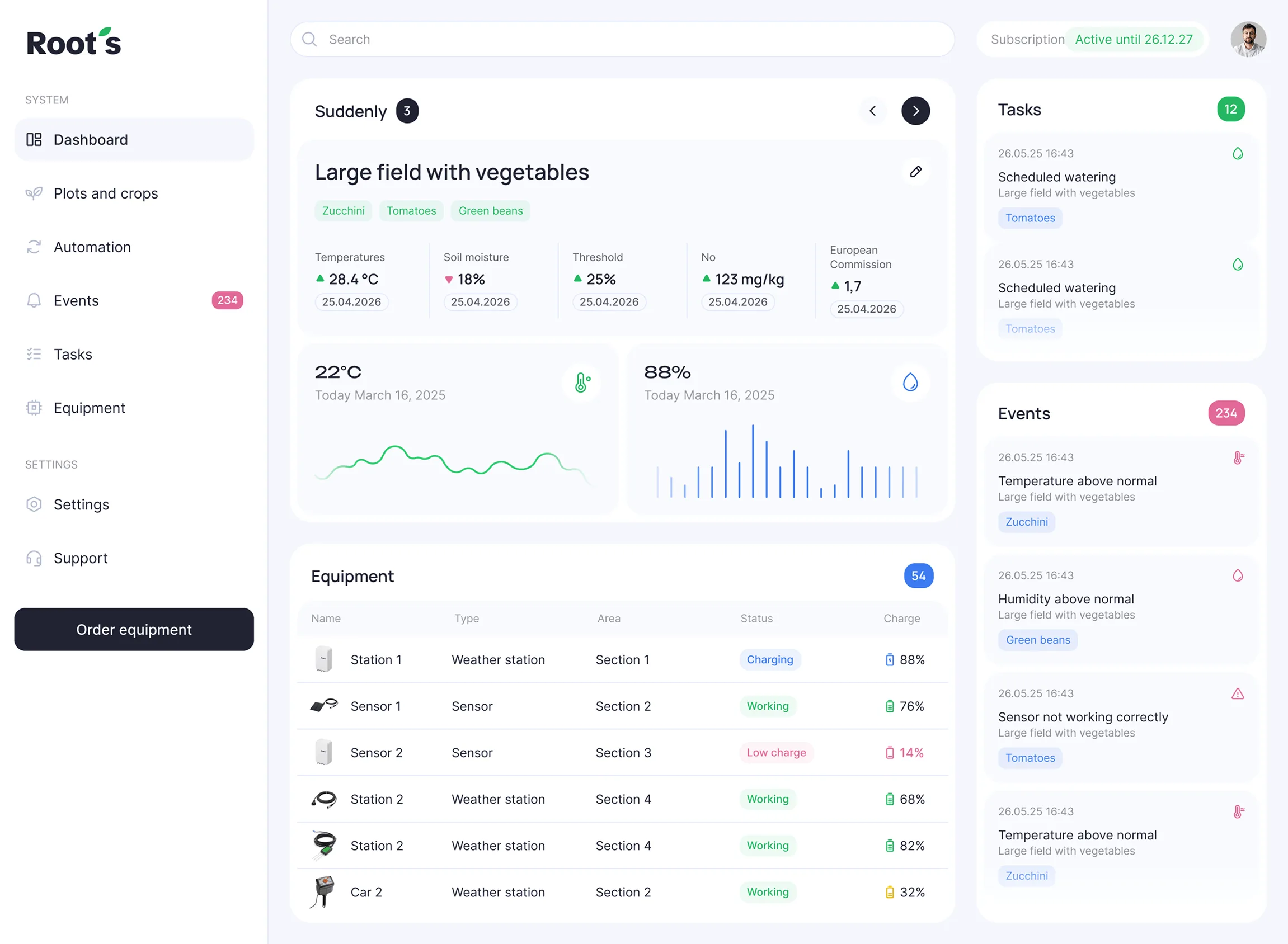
Why you need
an automation system

Disease forecast accuracy
model accuracy up to 94–96%

Prediction of phenological stages
error margin ≤ 2 days

Resource use optimization
reduction in irrigation and treatment costs by up to 35%

Automatic sensor calibration
deviation ≤ 1.8%
Working with different crops
Choose a crop and manage the full cycle: from condition monitoring to precision irrigation, nutrition, and yield forecasting. The system adapts to the needs of each specific plant.

Greenhouse crops
Tomatoes, Cucumbers, Peppers, Lettuce and leafy greens, Basil, dill, parsley

Flower crops
Roses, Tulips, Chrysanthemums, Seasonal ornamental plants

Open field
Potatoes, Corn, Sunflower, Wheat, Barley

Berry and fruit crops
Strawberries, Raspberries, Grapes
A digital tool
for growth
for growth
Helps manage the farm, save resources, organize processes, accelerate development, and monitor the harvest without extra effort
Core features
Real-time plant monitoring
Receive data from field and climate sensors across more than 20 parameters for full control over plant condition and fast response.
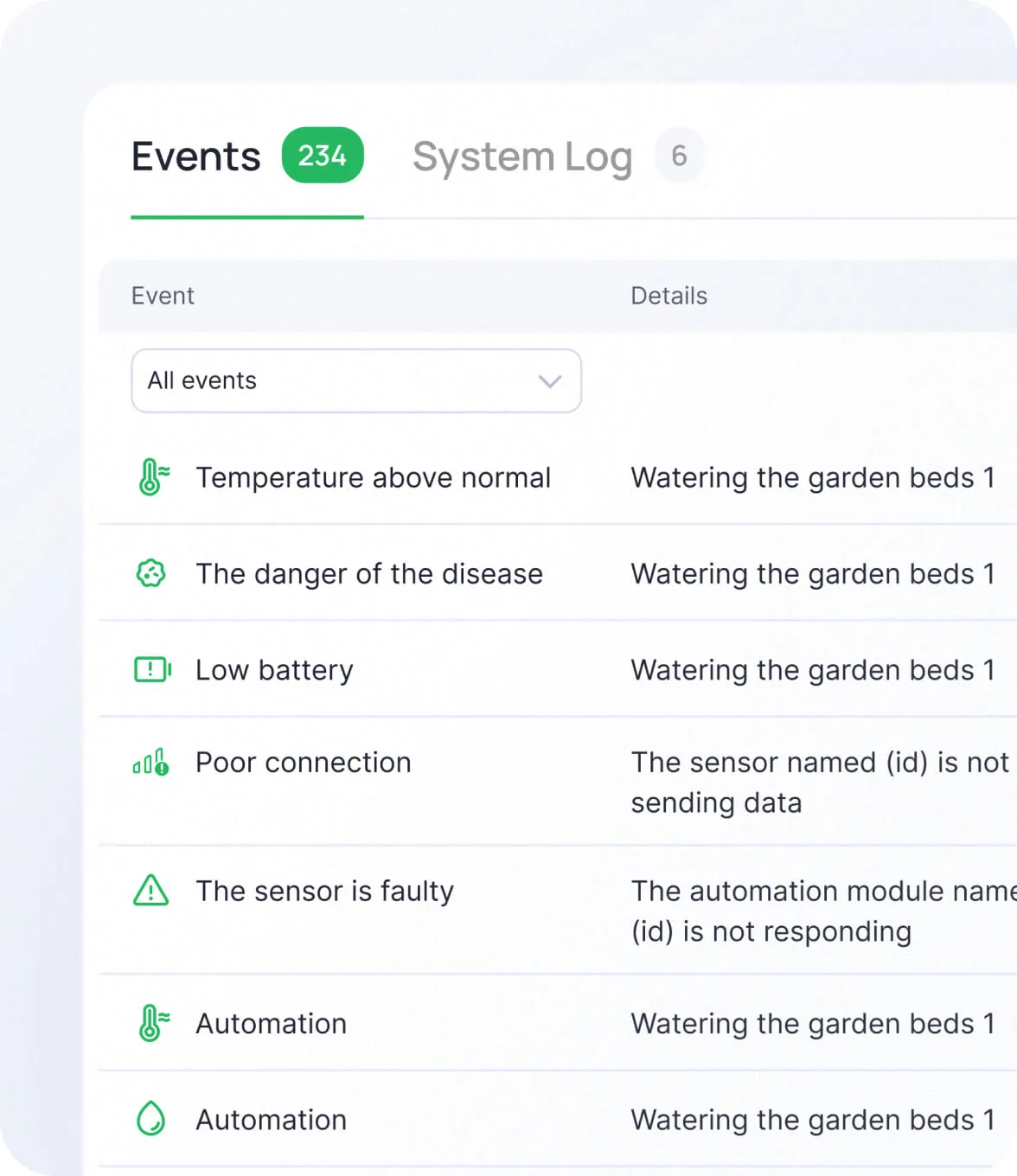
Smart notifications and events
The system automatically reports critical parameter changes, deviations from the norm, and required actions, without requiring constant user supervision.
Disease and growth stage forecasting
AI analyzes sensor data and plant development dynamics, forecasting disease risks and key growth stages so you can act in time.
Core features

Registration
Create an account and get access to the control panel, where you can add the farm, plots, crops, and equipment.

Selection
Choose the right equipment from the recommended list, and we will help you choose the optimal set for your tasks.

Setup
Install and connect the devices using the step-by-step guide. If needed, our team will help at every stage.

Equipment
We support equipment of our own production and devices from popular agri-tech brands
In-house equipment
Devices from other brandsSoon
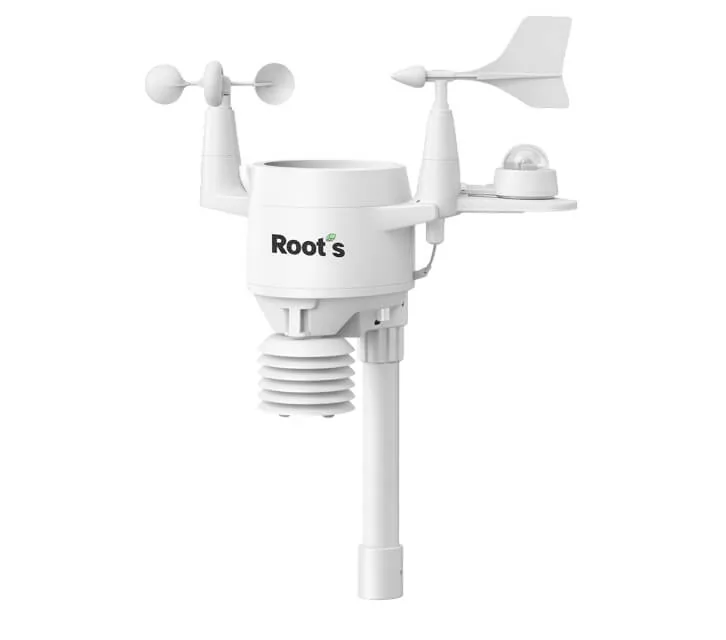
Weather station
The weather station measures the key climate parameters of the site. Main indicators: air temperature, air humidity, wind speed and direction, solar radiation level, and precipitation. The data is used to analyze growing conditions and build forecasts.
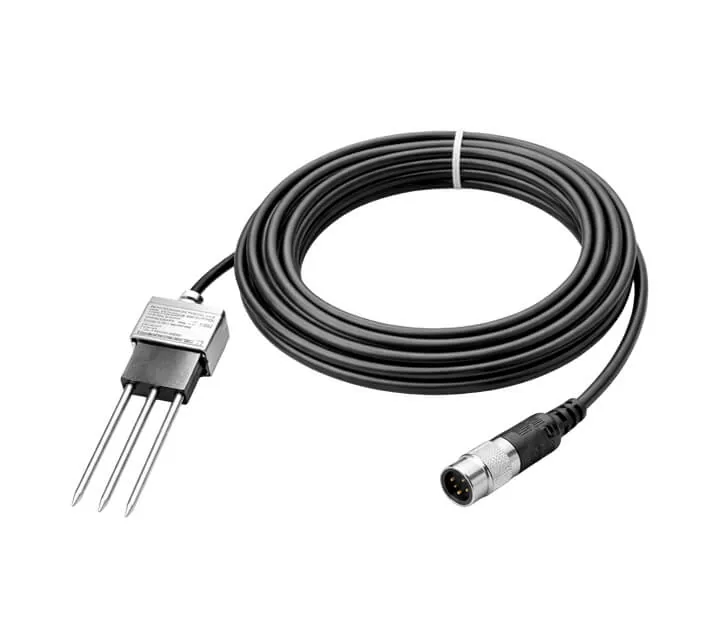
Soil sensor
The soil sensor measures key soil parameters in real time and lets you monitor the condition of the plant root zone.
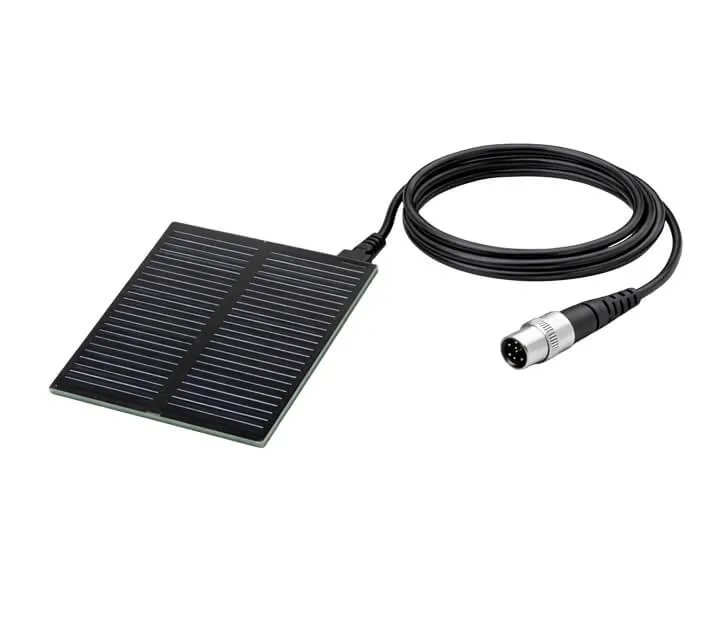
Solar panel
The compact solar panel provides autonomous power for the system. Capabilities: charging the field module, supporting operation in remote locations, and reducing dependence on external power supply. It is used as a primary or backup power source.
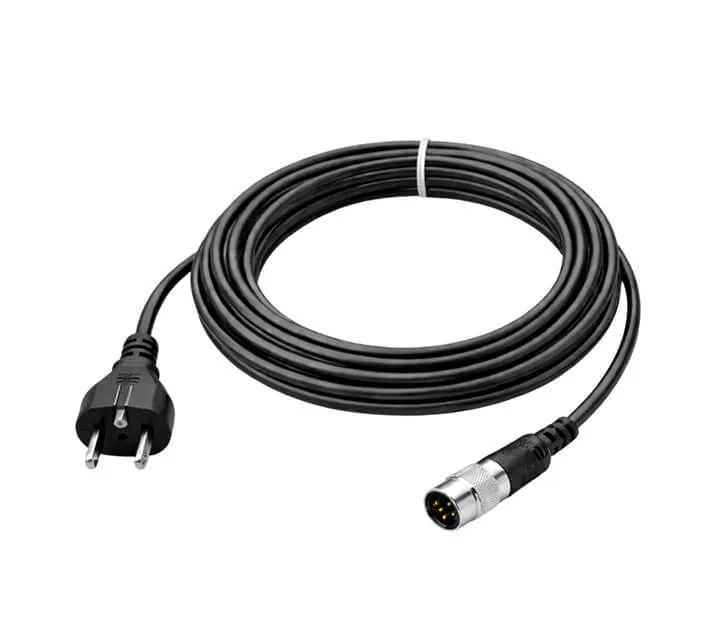
Power cable
The power cable is used to connect the system to an external power source. It is used for both the main module and the field module.

Main module
The main module is the communication hub of the system. Functions: internet connection, receiving data from field modules, transmitting information to the server, and synchronization with the monitoring platform.
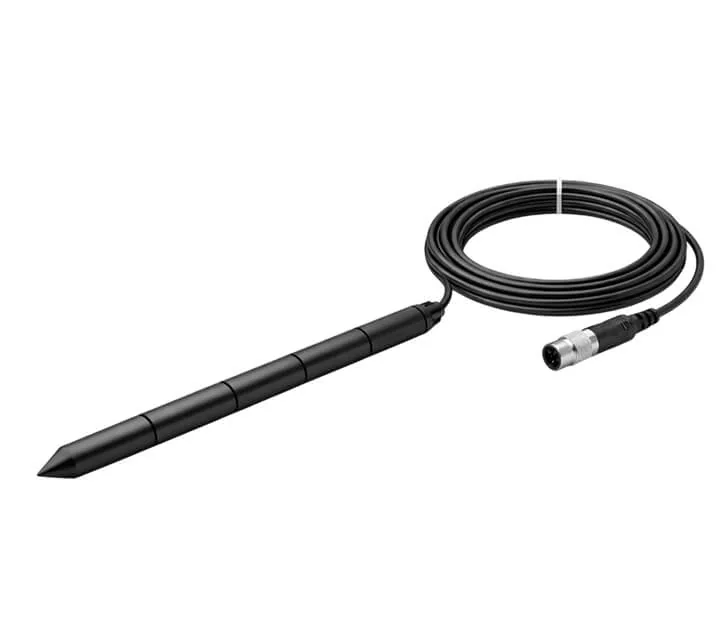
Subsurface moisture profile sensor
This sensor measures moisture distribution at different depths. Functions: determining how deep water lies in the soil, analyzing moisture by soil layer, and monitoring irrigation penetration depth. It helps you understand how effectively the irrigation system is working.
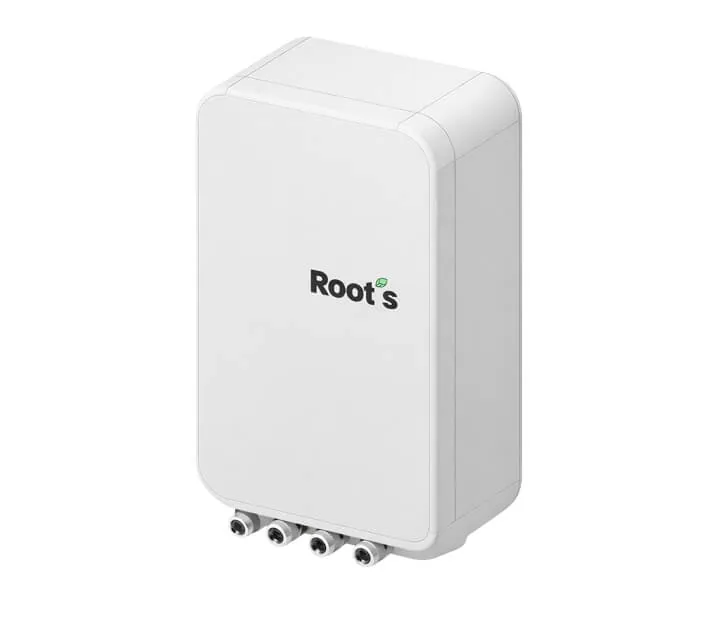
Field module
The field module is the central element of the monitoring system, installed directly on the site. The module includes a battery, an electronic data processing board, and sensor connection interfaces. It supports connecting up to 4 different sensors.
Weather station
The weather station measures the key climate parameters of the site. Main indicators: air temperature, air humidity, wind speed and direction, solar radiation level, and precipitation. The data is used to analyze growing conditions and build forecasts.
Soil sensor
The soil sensor measures key soil parameters in real time and lets you monitor the condition of the plant root zone.
Solar panel
The compact solar panel provides autonomous power for the system. Capabilities: charging the field module, supporting operation in remote locations, and reducing dependence on external power supply. It is used as a primary or backup power source.
Power cable
The power cable is used to connect the system to an external power source. It is used for both the main module and the field module.
Main module
The main module is the communication hub of the system. Functions: internet connection, receiving data from field modules, transmitting information to the server, and synchronization with the monitoring platform.
Subsurface moisture profile sensor
This sensor measures moisture distribution at different depths. Functions: determining how deep water lies in the soil, analyzing moisture by soil layer, and monitoring irrigation penetration depth. It helps you understand how effectively the irrigation system is working.
Field module
The field module is the central element of the monitoring system, installed directly on the site. The module includes a battery, an electronic data processing board, and sensor connection interfaces. It supports connecting up to 4 different sensors.